

HPLC detectors
Detection That Keeps Pace With Your Separation
From variable-wavelength UV/Vis through refractive index, evaporative light scattering, diode-array spectral confirmation, and dedicated radio-HPLC — Sykam detectors are built for stable baselines, wide linear range, and years of dependable service. Our S 3245 and S 3250 UV/Vis modules combine a rugged optical bench with exceptional linearity, so routine QC and demanding research methods share the same trusted hardware.
UV/Vis
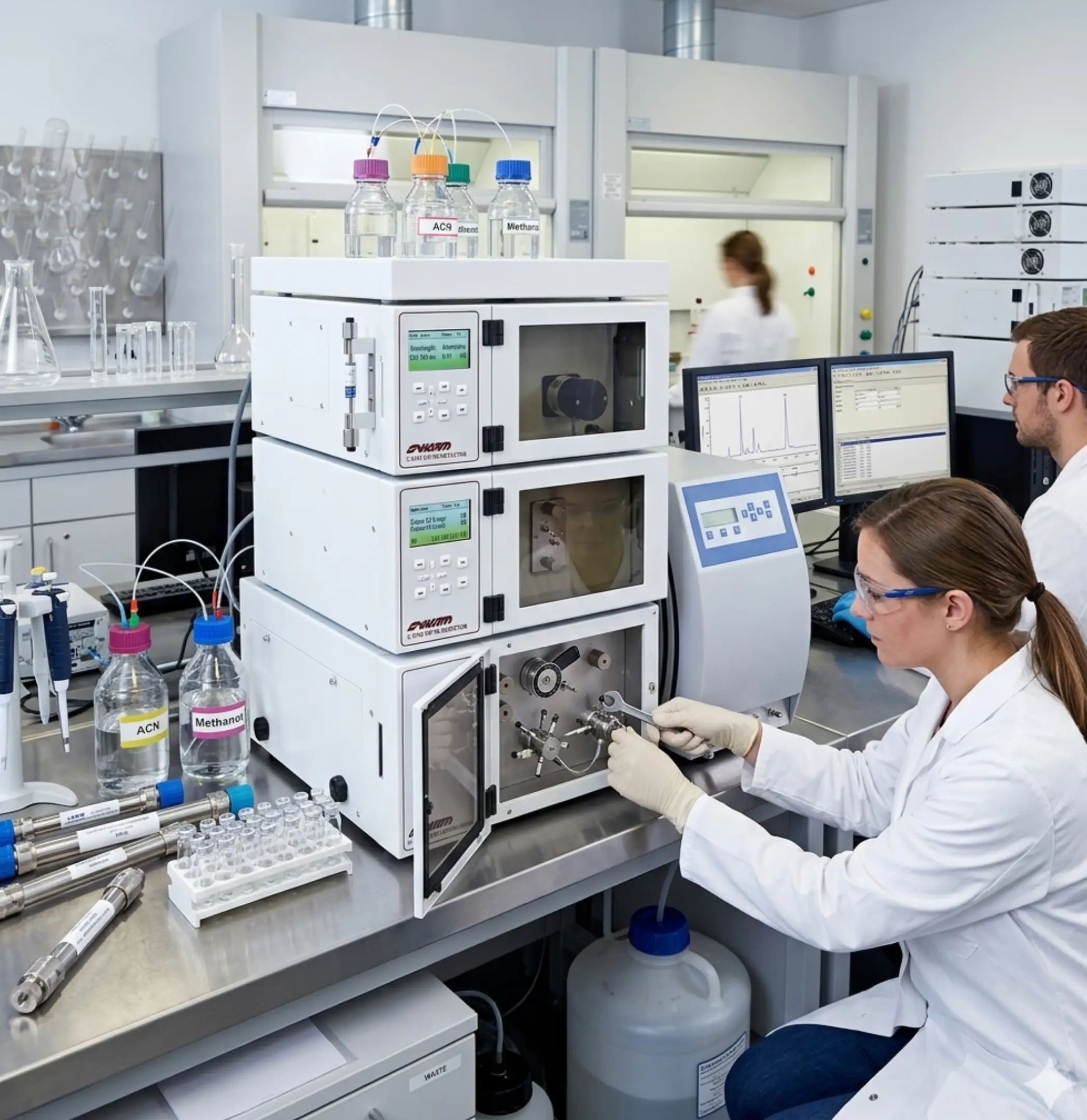
S 3245 — Variable-Wavelength UV/Vis Detector
Routine and research-grade photometry from 190 nm to 900 nm
The S 3245 is a variable-wavelength UV/Vis detector engineered for methods where baseline stability and linear response matter as much as sensitivity. A dual-lamp optical path (deuterium plus tungsten) delivers full spectral coverage with low baseline noise, while a front-access flow cell speeds maintenance and reduces downtime. Pre-aligned lamps sit in a side-access housing, so lamp exchange stays quick and predictable — ideal for high-throughput labs and teaching environments alike.
Specifications
- Materials
- Stainless steel or PEEK
- Wavelength range
- 190 – 900 nm
- Light sources
- Deuterium lamp; tungsten lamp
Applications
Pharmaceutical and chemical QC, environmental monitoring, academic teaching labs, and any UV-active method where you need dependable quantitation without constant optical tinkering.
UV/Vis
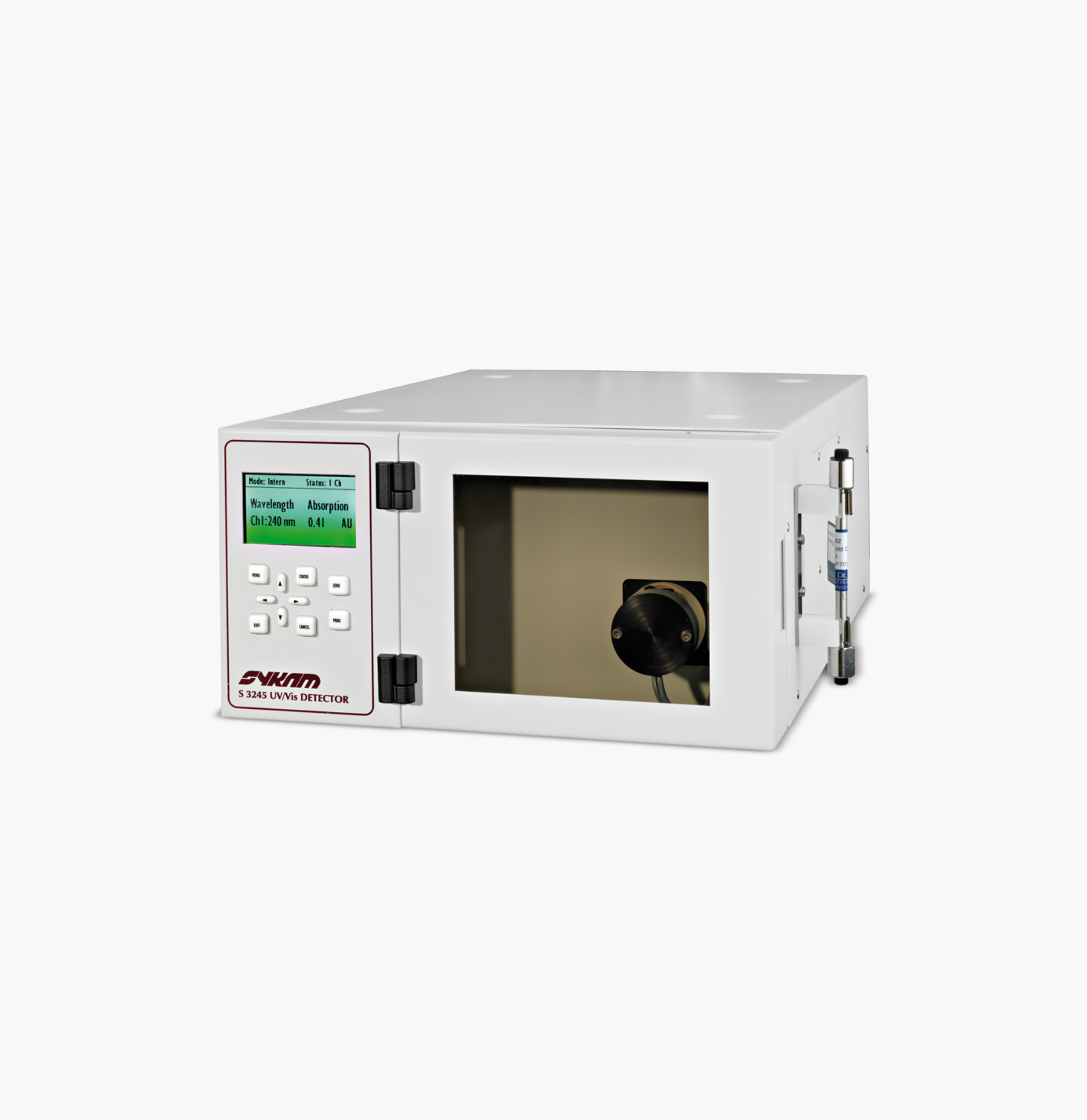
S 3250 — Variable-Wavelength UV/Vis Detector
The same optical performance as the S 3245 in an expanded enclosure
The S 3250 offers the same dual-lamp UV/Vis engine as the S 3245 — 190–900 nm coverage, low baseline noise, and a user-friendly flow cell — packaged for installations that benefit from a larger chassis. Choose it when rack layout, cable routing, or future option slots favor a full-width module without compromising on wavelength programming or day-to-day service access.
Specifications
- Materials
- Stainless steel or PEEK
- Wavelength range
- 190 – 900 nm
- Light sources
- Deuterium lamp; tungsten lamp
Applications
Any workflow suited to the S 3245 — with a form factor that fits larger system footprints and integration projects where physical space behind the panel is not the limiting factor.
Refractive index
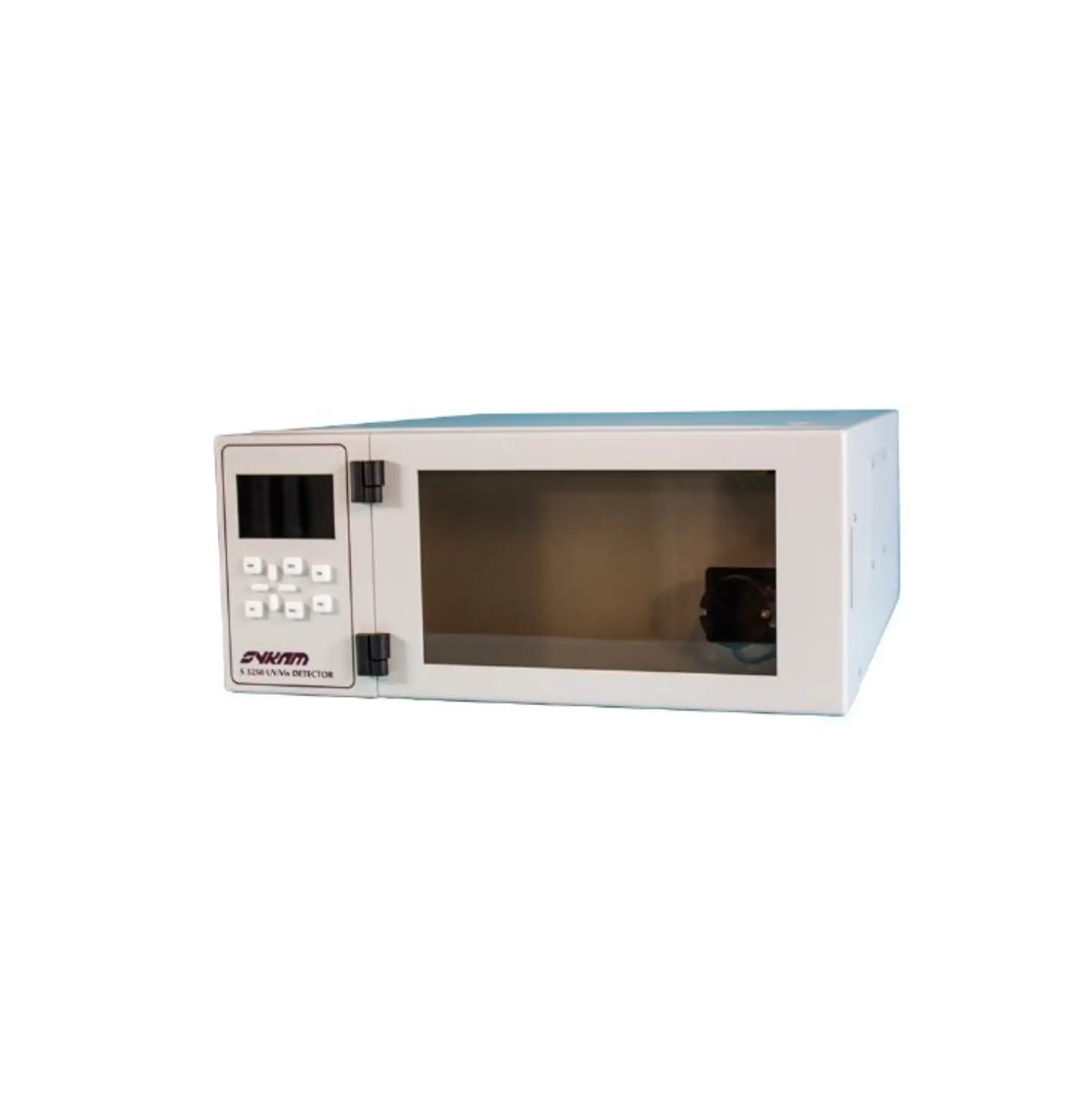
RI 2000 — Refractive Index Detector
High sensitivity with the baseline stability RI methods demand
The RI 2000 series is designed for analysts who work without a chromophore: polymers, sugars, lipids, and many excipients show little or no UV response, yet still need confident quantitation under isocratic conditions. Very high sensitivity pairs with excellent baseline stability, detection sensitivity, and reproducibility — the combination you need when refractive index is your only practical universal channel.
Specifications
- Flow rate — Micro
- 0,2 – 3,0 ml/min
- Flow rate — Analytical
- 0,2 – 3,0 ml/min
- Flow rate — Semi-preparative
- 1 – 50 ml/min
- Linearity range — Micro
- 0 – 500 RIU
- Linearity range — Analytical
- 0 – 1000 RIU
- Linearity range — Semi-preparative
- 0 – 20000 RIU
Applications
Carbohydrate and polymer characterization, formulation excipients, surfactants, and other non-UV analytes separated under isocratic elution — wherever a stable RI trace is the difference between a trusted result and ambiguous integration.
ELSD
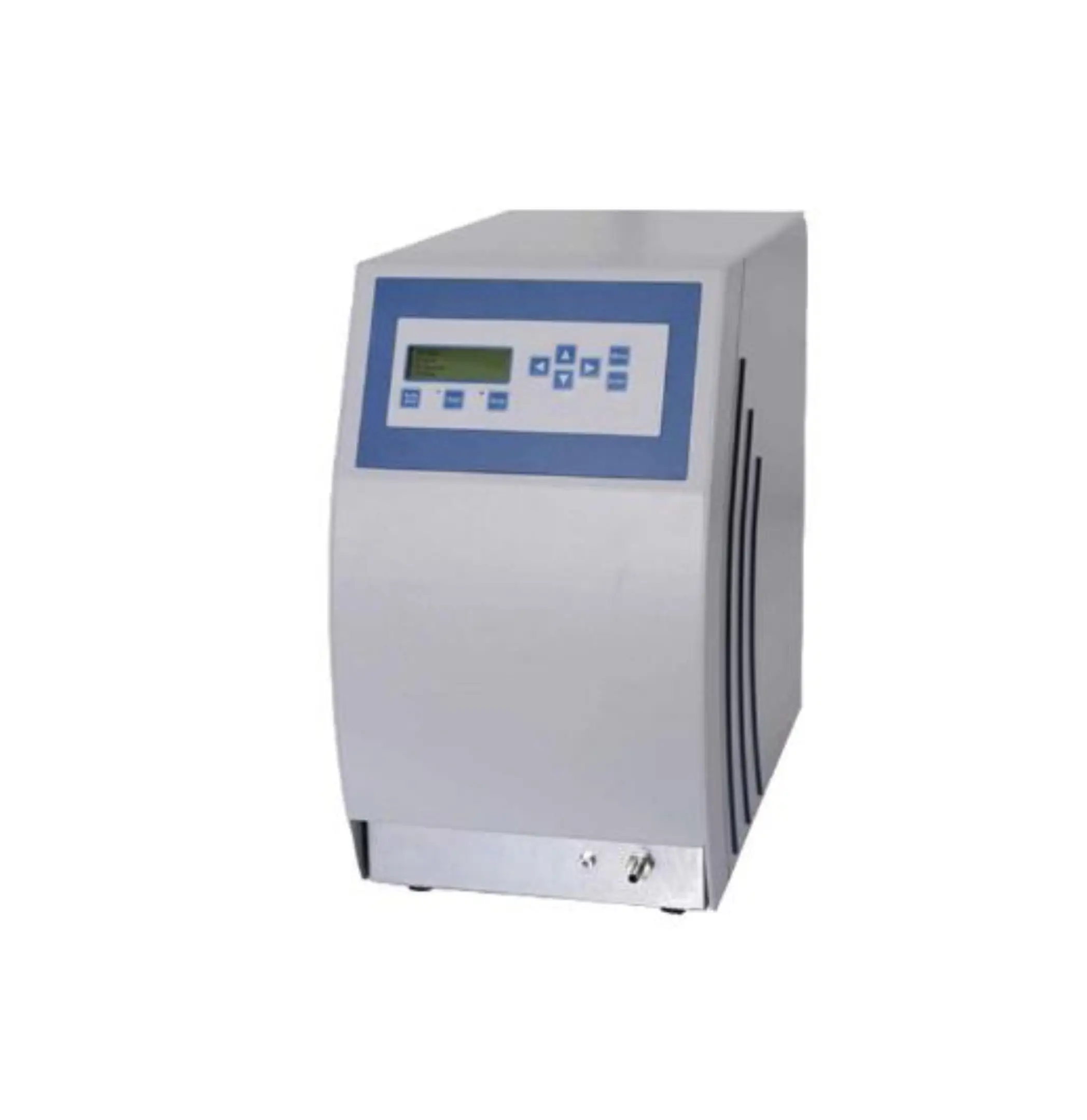
ZAM 3000 — Evaporative Light-Scattering Detector
Universal detection when UV and RI are not enough
The ZAM 3000 evaporative light-scattering (ELSD) detector closes the gap for analytes without useful UV absorption, poor isocratic resolution, and cases where gradient elution rules out classical RI detection. After nebulization and evaporation of the mobile phase, scattered light reports mass-related response — so lipids, sugars, polymers, and surfactants remain visible even as you optimize complex gradients. The eluent must be fully volatile; when that condition is met, ELSD becomes one of the most persuasive "universal" channels in the HPLC stack.
Specifications
- Detection
- Photomultiplier
- Temperature range
- External up to 70 °C
- Nebuliser gas flow
- < 1 l/min
Applications
Gradient methods for non-chromophoric compounds — natural products, polymers, food and surfactant matrices — wherever you need a mass-sensitive signal independent of UV extinction.
PDA / DAD
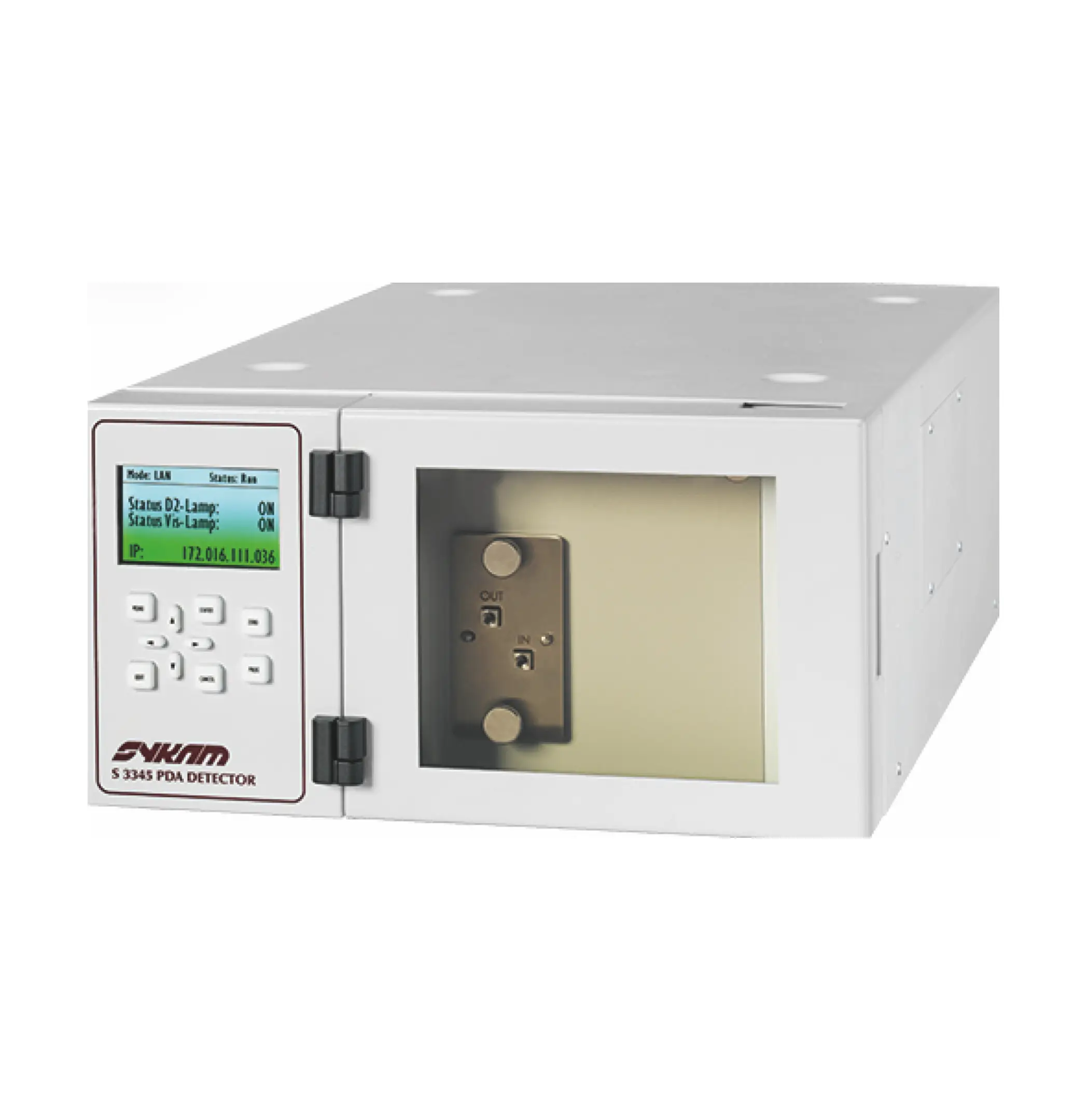
S 3345 — Photodiode-Array (DAD) Detector
Spectral confirmation and multi-wavelength quantitation in one module
The S 3345 diode-array detector captures full spectral context alongside your primary wavelengths: 256 diodes cover 190–720 nm, or choose a 1024-diode configuration for 190–1015 nm coverage when deep-UV or extended-range characterization matters. Dual-lamp excitation (deuterium and tungsten), fiber optics, and a Z-shaped flow cell work together for high sensitivity with low noise. Four independent wavelength channels run in parallel for ratioing and multi-compound workflows, and an integrated peak detector adds standalone usability when you need a fast, self-contained signal.
Specifications
- Fluid-contact materials
- Stainless steel / PEEK, PTFE, glass
- Wavelength range
- 190 – 720 nm (256 diodes); optional 190 – 1015 nm (1024 diodes)
- Light sources
- Deuterium lamp; tungsten lamp
- Baseline noise
- ± 1 × 10⁻⁵ AU at 240 nm
- Baseline drift
- < 3 × 10⁻⁴ AU/h
- Wavelength accuracy
- 0,5 nm
- Mean pixel pitch
- 2,2 nm
- Linearity
- > 2,0 AU
- Power supply
- 100 – 250 V~ (47 – 63 Hz)
- Flow cell
- Stainless steel or PEEK; analytical / preparative
Applications
Peak purity checks, impurity profiling, method development, and regulated environments where spectral libraries and multi-wavelength traces support documentation and faster troubleshooting.
PDA / DAD
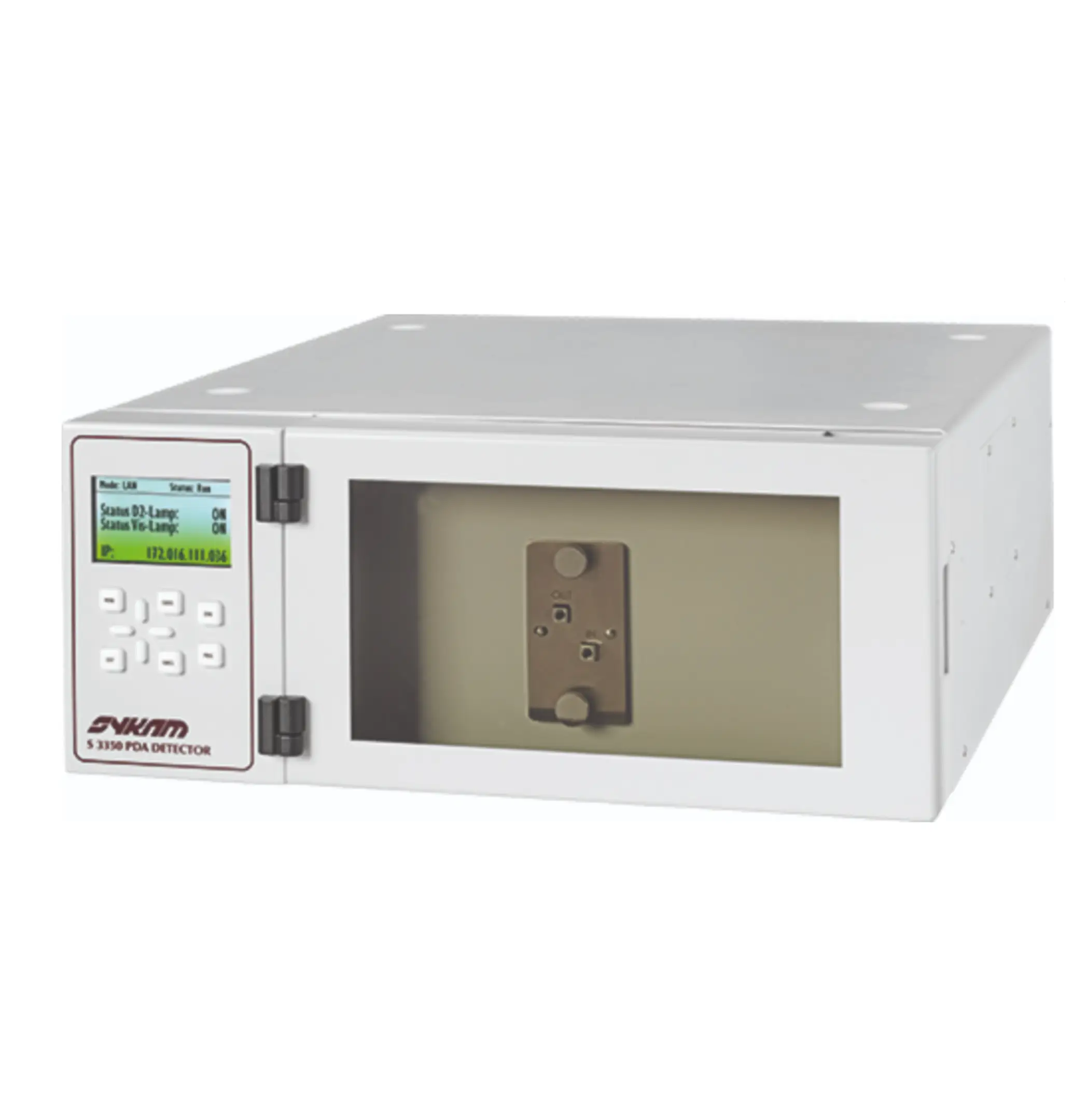
S 3350 — Photodiode-Array (DAD) Detector
Same DAD intelligence with a larger system footprint
The S 3350 delivers the same diode-array performance as the S 3345 — dual-lamp optics, fiber-coupled Z-cell, four simultaneous wavelength channels, integrated peak detection, and optional extended spectral range with 1024 diodes — in an enclosure suited to installations that prioritize rack layout and expansion. If your qualification plan or cabinet design calls for more physical room without stepping down in optical capability, the S 3350 is the parallel choice.
Specifications
- Fluid-contact materials
- Stainless steel / PEEK, PTFE, glass
- Wavelength range
- 190 – 720 nm (256 diodes); optional 190 – 1015 nm (1024 diodes)
- Light sources
- Deuterium lamp; tungsten lamp
- Baseline noise
- ± 1 × 10⁻⁵ AU at 240 nm
- Baseline drift
- < 3 × 10⁻⁴ AU/h
- Wavelength accuracy
- 0,5 nm
- Mean pixel pitch
- 2,2 nm
- Linearity
- > 2,0 AU
- Power supply
- 100 – 250 V~ (47 – 63 Hz)
- Flow cell
- Stainless steel or PEEK; analytical / preparative
Applications
Identical application scope to the S 3345 — spectral method development, QA/QC, and research — with a hardware format tailored to larger stacks and OEM integration.
Radio-HPLC
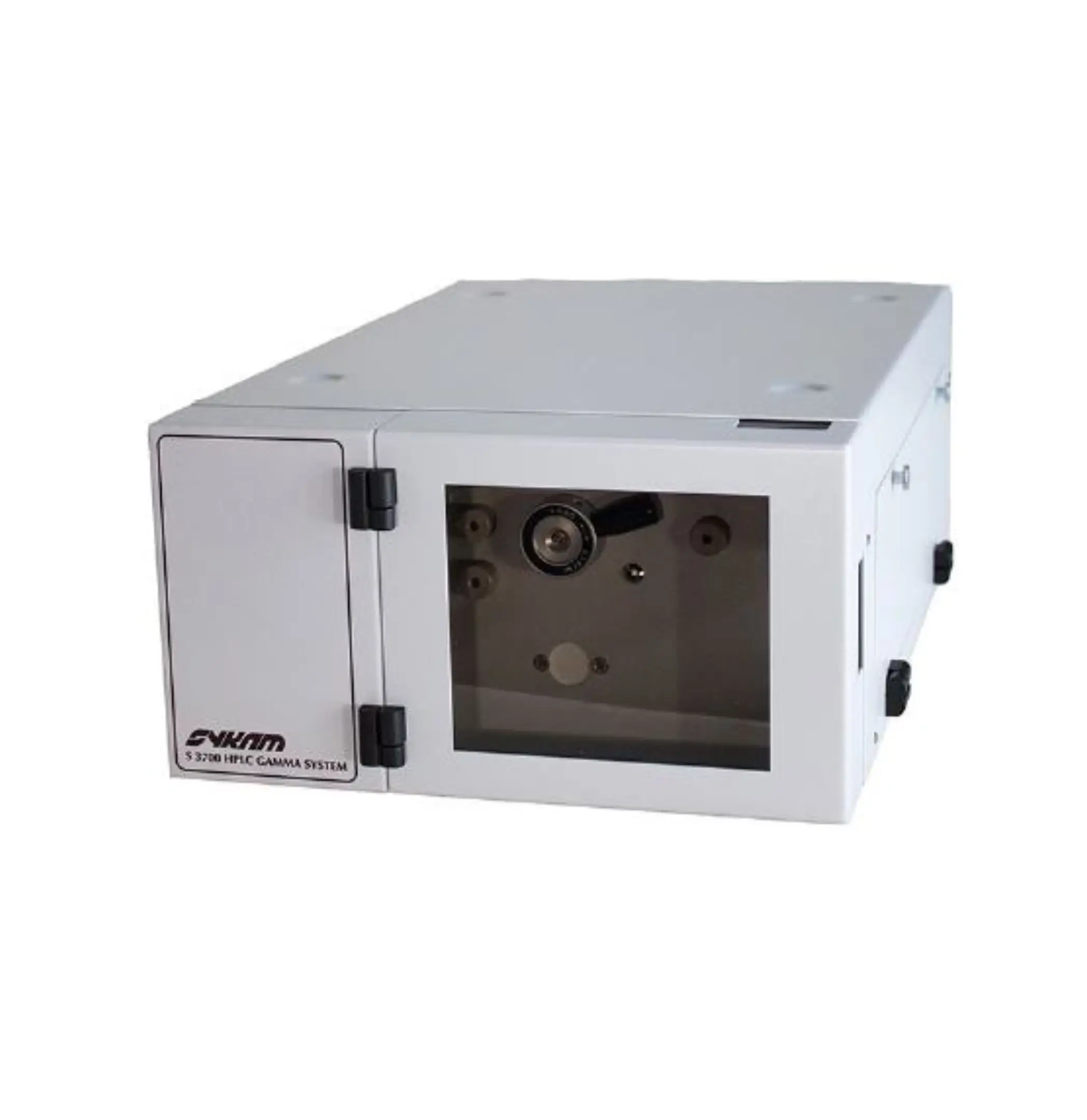
S 3700 — Radioactivity Detector
Sensitive γ and positron detection with flexible loop volumes
The S 3700 couples a sensitive 2″ NaI(Tl) scintillation detector with a bore-hole crystal in 4π geometry for both gamma (20–1300 keV) and positron detection. Interchangeable measurement loops give you flexibility across activity levels and peak widths, while automatic half-life correction keeps reported peak intensities physically meaningful. Wetted components are fully shielded, and an integrated injection valve streamlines radiochemical workflows where time-to-result and operator safety are non-negotiable.
Specifications
- Materials
- Stainless steel or PEEK
- Detector
- NaI(Tl) scintillation detector with photomultiplier
- Maximum sensitivity
- 511 keV
Applications
Radiopharmaceutical development and QC, nuclear medicine, and tracer studies where fast, reliable nuclide-specific response and flexible loop sizing support both R&D and release testing.
Choosing between UV/Vis, RI, ELSD, PDA, and radio detection depends on your chemistry, elution mode, and regulatory context. Contact us — we will help you match detector technology to your methods and integration requirements.