Precision Made in Germany
Precision Made in Germany
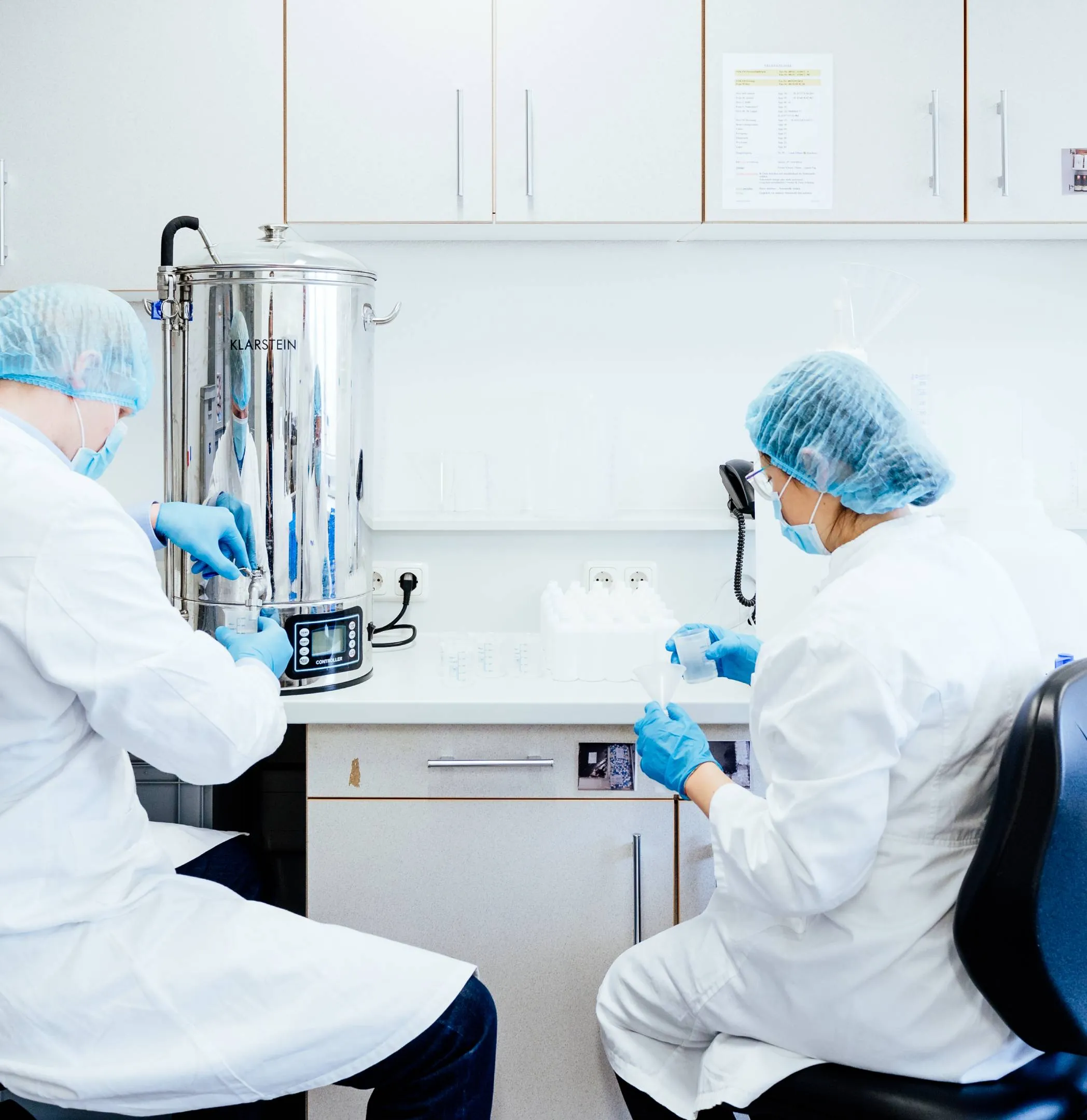
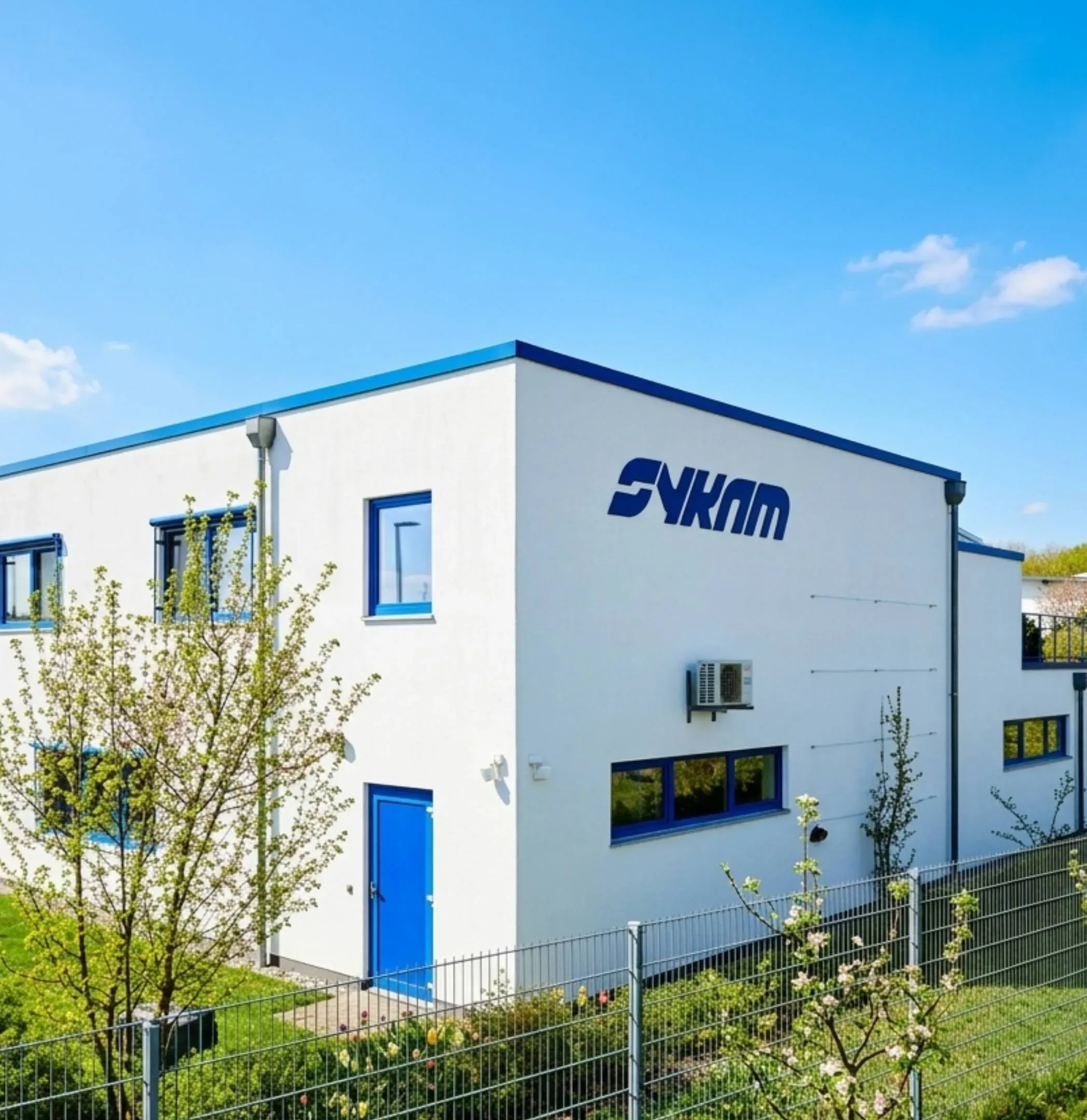
Every Sykam instrument is designed, engineered, and manufactured in Fürstenfeldbruck, Bavaria — under one roof and under one quality system. From CNC-machined pump heads and hand-assembled optical benches to custom control electronics, we build the subsystems that define chromatographic performance ourselves. This vertical integration is not a claim on a brochure; it is the reason our published specifications match what you see in your laboratory. When one team designs, machines, assembles, and tests the complete system, configuration flexibility increases, lead times stay predictable, and long-term service and spare-parts support remain available over the full life of the instrument.
In-house
Under One Roof
Manufacturing, testing, and materials — all in-house in Fürstenfeldbruck. Scroll to see how we build chromatography hardware, how we verify performance, and which materials we specify for long service life.
In-house manufacturing
Pumps. Dual-piston stainless steel or PEEK heads with ceramic pistons and sapphire/ruby seats. S 1130 stepper-driven units offer precise flow, low/high-pressure gradients, and sealed low-maintenance drives.
Preparative. S 1525 delivers 150–1,000 mL/min (up to 400 bar), stainless or PEEK, with optional gradient mixing.
Fluid handling. S 6000 valves, S 7515 Teflon AF® degassers, and S 7141/7151 reagent tables with inert caps and gas pressurization.
Detection. UV/Vis (S 3245, 190–800 nm), RI, light-scattering, conductivity, and IC modules integrated with ChromStar 7.
Testing & QA
Factory validations confirm published specs:
- Pumps (S 1130) ±1% flow accuracy, ±0.1% precision, up to 40 MPa, gradient accuracy <0.5%.
- UV/Vis (S 3245) noise ±1×10⁻⁵ AU, wavelength ±2 nm, linearity >2 AU.
- Degasser (S 7515) <20% residual gas, <500 µL per channel.
- Preparative columns pressure-tested 150 bar for 60 min.
- Valves (S 6000) 50 k injection warranty, NFI geometry, full chemical compatibility.
Each system ships fully verified to documented, not marketing, specs.
Precision materials
- Wetted components use stainless, PEEK, PTFE, PVDF, ceramic, sapphire, or ruby per application.
- Degassers employ Teflon AF® capillaries with extended membrane warranty.
- Preparative columns feature solid PEEK, glass-ceramic frits, steel burst fittings, and Viton seals.
- Valves use DiaDur-coated stators and rotors tuned to pH and solvent stress.
- Reagent units include stainless tableaus, safety bottles, and inert-gas blanketing up to 15 bar.
1 · Manufacturing scope
What we build
From module to turnkey system
Sykam develops and manufactures analytical and preparative HPLC systems, ion chromatographs, and amino acid analyzers for laboratories and production environments worldwide. Modular instruments built around S 600 series components cover analytical HPLC, IC, and amino acid workflows in a compact, stackable format with a typical footprint of 396 × 165 × 478 mm. For scale-up and production tasks, preparative systems such as the S 1525 deliver flows from 150 to 1,000 mL/min in stainless steel or PEEK configurations at pressures up to 400 bar, depending on model and setup.
The same engineering team supports turnkey chromatography plants that combine pumps, valves, detectors, degassing, and column hardware into integrated, validated solutions for industrial purification and process monitoring. Laboratories can establish methods on analytical HPLC or IC systems and transfer them to preparative pumps and columns that maintain compatible materials and fluidic concepts. Custom multi-valve and multi-detector layouts support fraction collection, column switching, online sample cleanup, and process analytics in a single integrated platform. For OEM customers and plant builders, Sykam supplies modules that act as the core of third-party systems, carrying the same mechanical and electronic design used in complete Sykam-branded instruments.
2 · Materials & precision engineering
How we build it
Pump mechanics built for lifetime performance
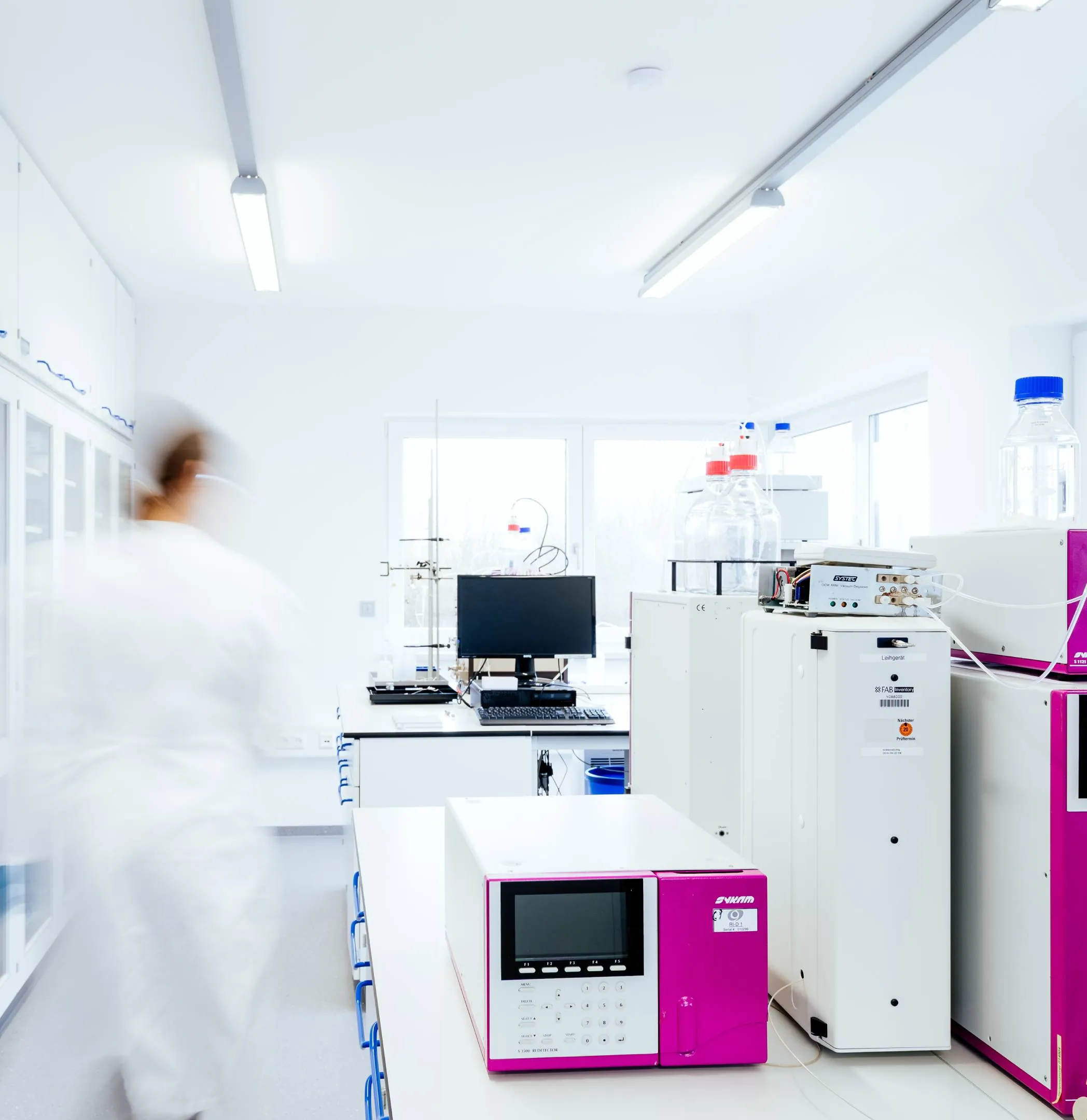
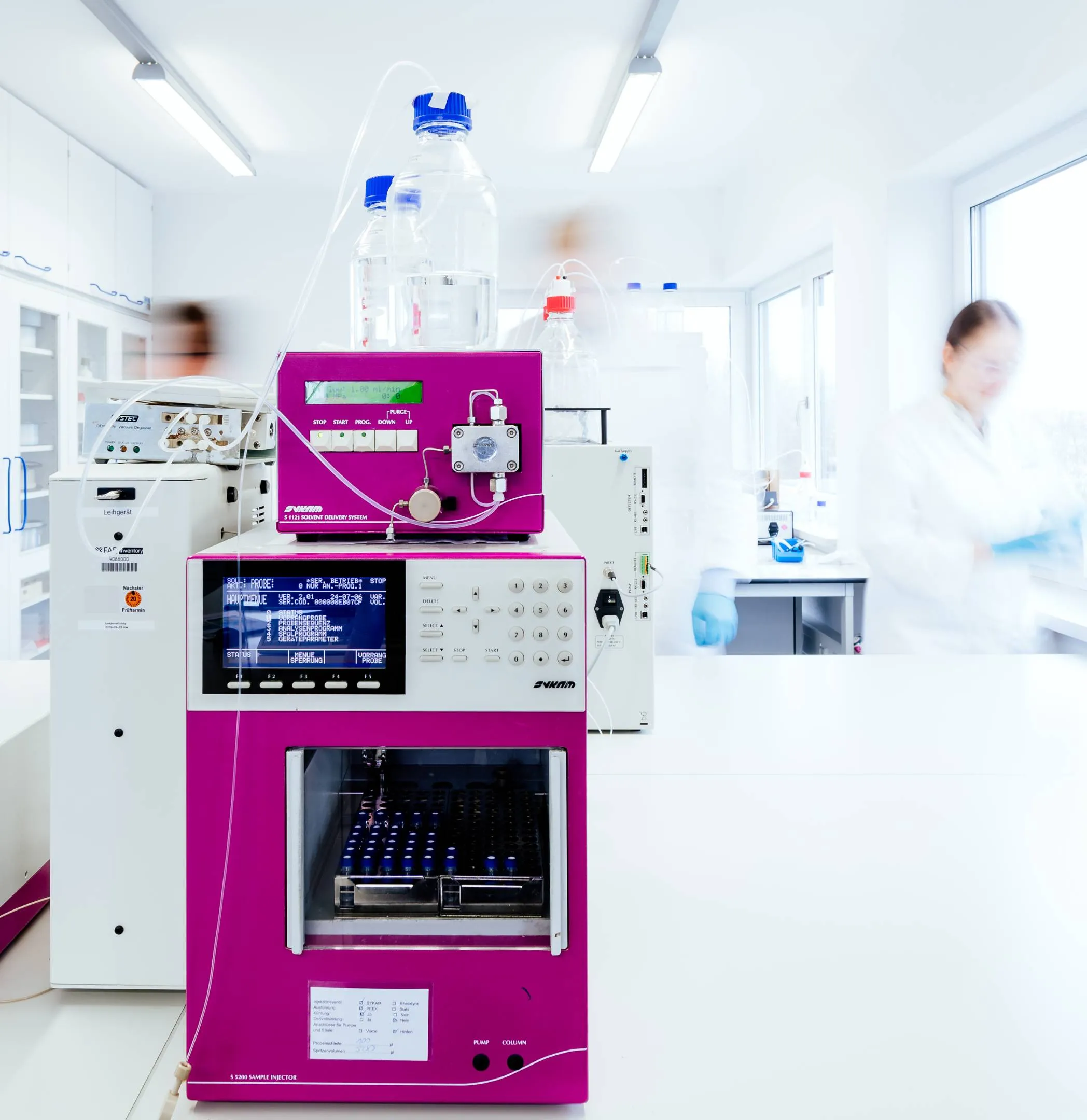
Sykam pump systems use dual-piston assemblies in stainless steel or PEEK with ceramic pistons and sapphire or ruby valve seats to deliver precise flow across micro, analytical, and semi-preparative ranges. The S 1130 family, for example, is driven by a high-power stepper motor whose fine resolution in the low-flow range enables accurate gradients and stable baselines. A permanently lubricated camshaft in a sealed housing reduces maintenance requirements and supports long service life in demanding routine use.
Configurations span isocratic, quaternary low-pressure gradient, and binary high-pressure gradient setups, allowing users to match pump mechanics and materials to each application. Wetted materials in Sykam systems include stainless steel, PEEK, PTFE, PVDF, ceramic, sapphire, and ruby, selected according to the requirements of metal-sensitive, biocompatible, or high-salt methods. Vacuum degassers such as the S 7515 use Teflon AF capillaries with low internal volume to remove dissolved gases efficiently while preserving gradient fidelity and response times.
2 · Materials & precision engineering
Detection, electronics & system integration
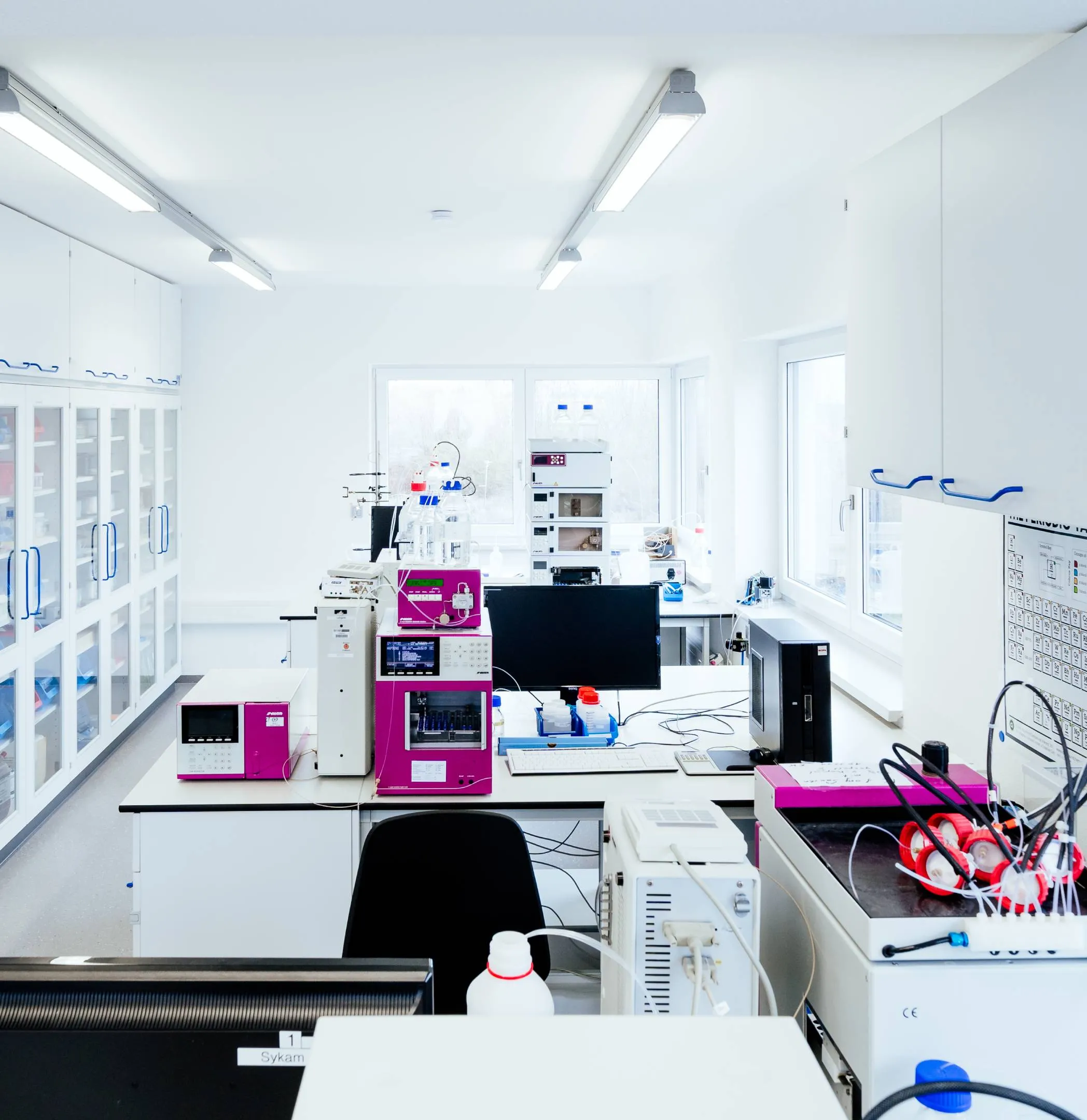
Sykam UV/Vis detectors employ optical benches with deuterium and tungsten lamps to provide coverage from approximately 190 to 800 nm, with specified wavelength accuracy and low baseline noise under defined conditions. Refractive index, conductivity, and other detector modules are designed and manufactured in-house, allowing tight control of flow-cell geometry, thermal stability, and electronic signal processing. Custom control boards and firmware coordinate pumps, valves, detectors, and autosamplers, ensuring that mechanical motion and signal acquisition are optimized as a single system.
This level of integration is particularly important in gradient applications, where solvent delivery, detector stability, and software timing directly determine chromatographic reproducibility. For laboratories that require metal-free or high-purity flow paths, PEEK-based components and optimized seals minimize interaction with analytes and buffers. Column ovens and preparative column hardware are machined from materials that maintain mechanical stability and chemical resistance under elevated temperatures and pressures.
3 · Proprietary surface technology
DiaDur / DLC coating
Engineered valve surfaces for long life
In high-pressure chromatography valves, surface finish and hardness directly influence wear, sealing behavior, and long-term tightness. Sykam’s DiaDur coating technology is applied to stainless steel stators in S 6000 series valves to create extremely hard, low-friction surfaces that resist abrasion from repeated switching under load. The combination of DiaDur stators with advanced rotor seal materials results in stable sealing faces over tens of thousands of injection cycles.
For laboratories running aggressive gradients or high-salt matrices, this reduces the risk of micro-leaks and shifting dead volumes that can compromise retention time stability and peak shape. By controlling the surface chemistry and roughness of key flow-path components, DiaDur-coated valves help maintain consistent internal geometry over the service life of the device. This benefits both analytical and preparative systems, where even small disturbances can impact fraction purity or detection stability.
Lower lifecycle cost, higher uptime
Sykam’s warranty terms for S 6000 series valves reflect the durability achieved with DiaDur coatings and rotor seal combinations, with catalog references to 50,000 injection guarantees under specified operating conditions. Longer valve life directly reduces the cost per injection, especially in autosampler-intensive workflows. Fewer interventions also translate into less downtime for qualification and leak testing after valve replacement.
For OEM partners, DiaDur-coated valves integrate into third-party systems as long-life components that support premium performance positioning and service offerings. This proprietary surface technology underpins reliable no-flow-interruption (NFI) operation in injection and switching valves, minimizing pressure spikes and disturbances during method-critical valve events.
4 · Testing & quality assurance
Verified quality
DIN ISO 9001 framework, documented processes
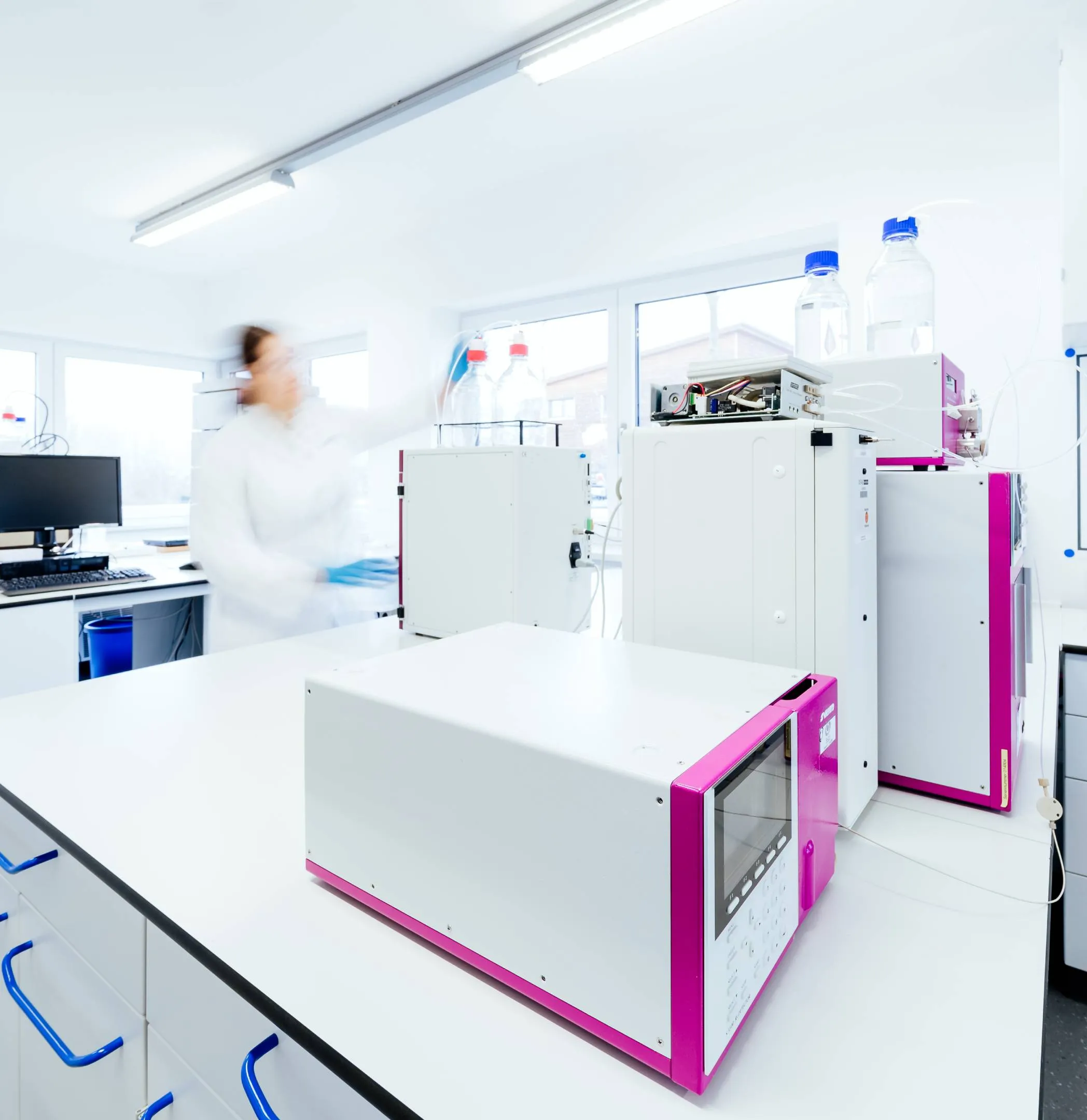
Sykam operates under a DIN ISO 9001-certified quality management system that governs incoming inspection, manufacturing, assembly, calibration, and final verification. Each stage is documented with process descriptions and checklists that ensure traceability from raw materials to shipped instruments. For laboratories working under GLP, GMP, or ISO 17025, this documentation simplifies instrument qualification, audit preparation, and lifecycle management.
The same quality framework applies to Sykam-branded instruments and OEM modules alike, aligning component-level control with system-level performance. Each instrument and module is associated with serialized components and batch records that document the materials and processes used in its manufacture. This allows Sykam to trace field behavior back to specific parts and process steps if a customer issue arises. For regulated customers, batch documentation supports installation qualification (IQ), operational qualification (OQ), and performance qualification (PQ) workflows across the instrument lifecycle.
Performance verified before shipment
Every Sykam system is functionally tested against defined specifications before it leaves the factory. For HPLC pumps, this includes verification of flow accuracy, precision, pressure capability, and gradient performance over defined operating ranges. Detectors are checked for baseline noise, drift, wavelength accuracy, and linearity under specified test conditions.
Autosamplers, ovens, and valves undergo mechanical and functional checks, such as injection precision, temperature accuracy, leak tightness, and switching behavior under pressure. The result is a direct link between factory test data, shipping configuration, and the performance observed in the customer’s laboratory. This alignment ensures that the specifications in datasheets reflect values that customers can reproduce in their own environment.
5 · OEM production
Components for integration partners
Modules built for system builders
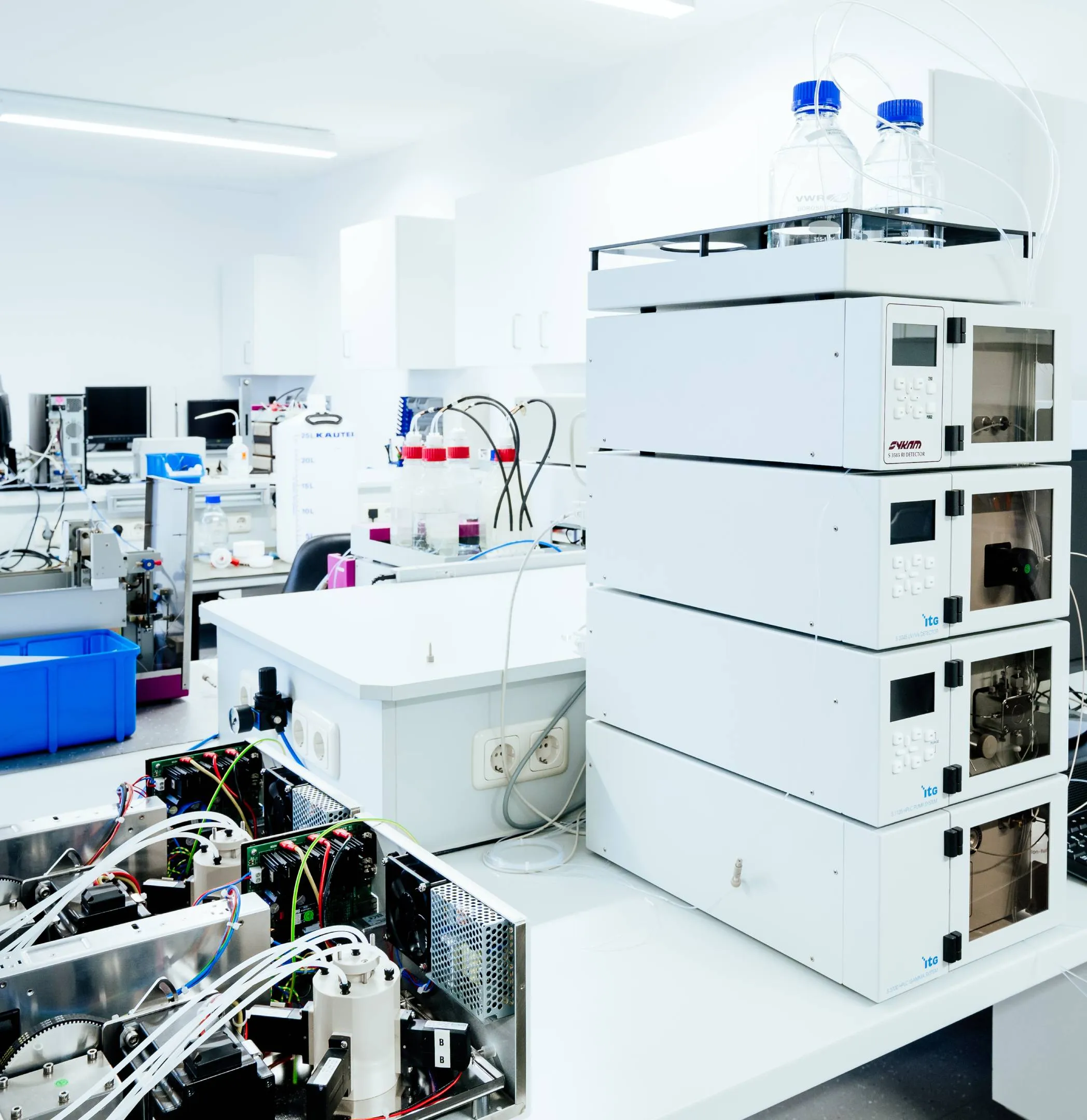
Beyond complete instruments, Sykam supplies pumps, detectors, valves, and other modules as OEM components to instrument manufacturers and system integrators worldwide. OEM customers benefit from the same production-quality mechanics, electronics, and firmware used in Sykam-branded systems, with options for mechanical, electrical, and software-level integration. Typical OEM deliverables include HPLC pumps with defined flow and pressure ranges, UV/Vis or RI detectors, injection and switching valves, degassers, and IC modules.
These building blocks allow partners to shorten development cycles and focus on application-specific features and software while relying on proven chromatography hardware. Because Sykam controls the design and manufacture of its modules, OEM projects can be configured with specific materials, flow ranges, and communication interfaces. Variants may include alternative wetted materials for biocompatible or metal-free applications, different pressure ratings, or modified housings and mounting options.
Customisation within a stable platform
Firmware and communication protocols can be adapted to integrate with third-party control software and automation environments. Throughout this process, OEM partners retain access to Sykam’s engineering and applications expertise for co-development and long-term support. The same specification philosophy applies to both OEM and Sykam-labeled hardware: performance values in documentation are based on factory testing under defined conditions.
OEM data sheets and qualification documents draw on the same test procedures used for standard products, giving integrators clarity on expected behavior and tolerances. This alignment simplifies system-level validation and regulatory submissions for OEM partners operating in pharmaceutical, clinical, or environmental markets. For procurement teams, sourcing OEM modules from the original manufacturer of complete systems reduces supply-chain complexity and technical risk.